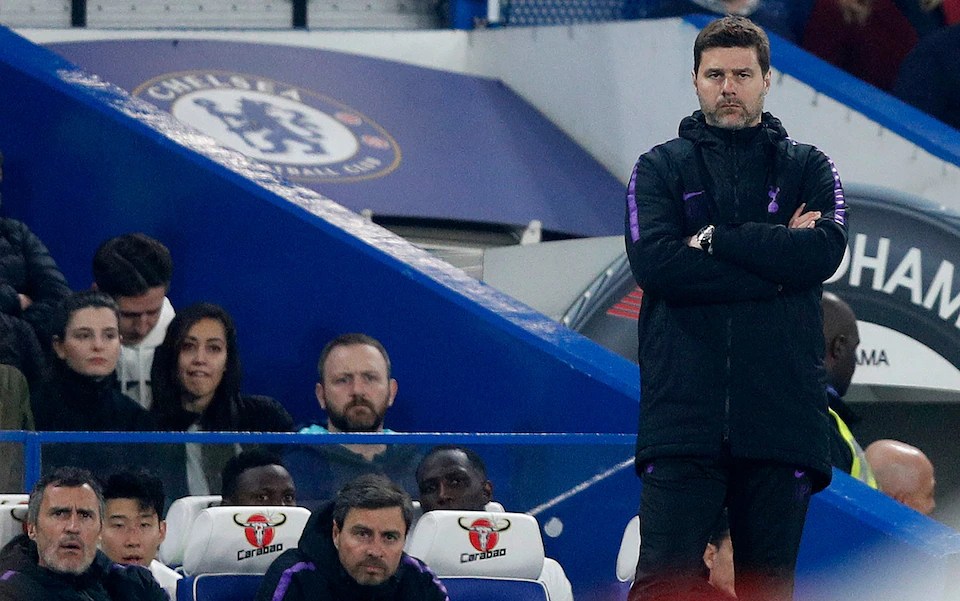
The summer of 2022 felt like a time for Chelsea fans to be optimistic. The clouds of doubt over the club’s future had been lifted following the takeover, and the new owners presented a grand vision for the future. Huge investment, modernisation of the club’s scouting and analysis departments, and bold plans for a redevelopment of Stamford Bridge. With the highly-rated tactician Thomas Tuchel at the helm, and a core of talented English players like Reece James, Mason Mount, Ben Chilwell and Raheem Sterling to build around, what could possibly go wrong?
It turns out, quite a lot. Tuchel was gone not long after that transfer window slammed shut, James and Chilwell suffered all too familiar injury problems, Sterling underwhelmed, and Mount found himself at a contract impasse and now looks likely to leave the club. Chelsea went all-in on Graham Potter, only to sack him before the end of the season, and the club finished the season managed by the ghost of Frank Lampard, with a group of under-motivated misfits going through the motions on the pitch.
Like many Chelsea fans, I gradually sank into apathy over the course of the season. Defeats which would have previously ruined my weekend were met with a tired shrug. Mercifully, the season came to an end last weekend and the next day the expected announcement of Mauricio Pochettino as the new Head Coach came.
In search of some reasons for optimism, and to learn more about the methods and personality Pochettino will bring to Chelsea, I decided to read Guillem Balagué’s excellent book Brave New World. The book is an account of Spurs’ 2016/17 season, compiled mainly of interviews and email exchanges with Pochettino and his staff, presented in a first-person narrative. The principles and values Pochettino holds shine through, and it provides a fascinating insight into his methods and thought process.
I decided to write this piece in order to discuss some of the key themes that I found particularly relevant to the new role Pochettino will take on at Chelsea, and how I think he can apply his methods to the challenges he’ll face. I should add that there’s a lot of interesting stuff in the book and this piece just scratches the surface – I highly recommend reading it if you enjoyed this.
Leadership
There are not many more rules. The rest is in their hands. They’re adults. I’ve never punished a player for being late. I prefer to talk it over with them. Punishment is the preserve of those who can’t wield their power in other ways. That is left for those who think they are bosses. I believe in leadership. Two different things.
Brave New World, p45
One thing that is very apparent throughout the book is that Pochettino thinks deeply about leadership. His aim is to create a culture of respect amongst the players, where all players buy in to the ethos of the team. He’s known as a coach who places high importance on physicality and attitude, and recognises that as a coach, he can only affect so much, and the players need to do the rest.
There are some things even hard work can’t improve. When certain moving parts, certain personalities, are put together, it affects the group. And to progress, it’s not enough to train, to have a good philosophy and working methods; sometimes you have to replace parts that don’t function. I even blurted out in front of my family, ‘Newcastle was awful, but so is this.’ This defeat has taught me a lot. You mustn’t let emotional attachments blind you. I’m going to start preparing mentally to make whatever decisions are necessary come the end of the season, because we’re here to win.
Brave New World, p85
This quote relates to a 2-1 defeat to Monaco, Spurs’ first Champions League match under Pochettino, and their first match at Wembley. Pochettino talks about how he expected the players to have a certain level of excitement for the occasion, and how he thought he’d need to rein them in, and make sure they stick to the plan. Instead, he had the opposite problem – they weren’t aggressive enough, and they let the game pass them by. He was furious about this, and saw it as a continuation of what was shown in their famous collapse against Newcastle at the end of the previous season.
This shows me that he will be ruthless when required to be. He’s fully aware of the various challenges in building a team culture, and one of his first tasks will be to assess the group and decide which players should be built around in years to come. My expectation based on his time at Spurs is that he’ll quickly form a leadership group and involve them in this process – he talks about his relationship with captain Hugo Lloris, who he saw as an honorary member of the coaching staff, and Harry Kane, the star of the team.
Emphasis On Youth Development
Janssen converted a penalty to score his first goal for the club. Eriksen captained the team which boosted his confidence. N’Koudou showed sparks of brilliance, but overall it was a day to celebrate for the academy. We won 5–0 and young Josh Onomah grabbed his first goal. Fittingly, everyone who celebrated that moment with him was also an academy product.
Brave New World, p89
Youth development and giving opportunities to academy products are very important to Pochettino. I imagine this would have been a key theme during the hiring process and his conversations with the board. The passage above discusses a Carabao Cup match against Gillingham where Pochettino gave a debut to a 17-year-old Marcus Edwards (as an aside, a player Pochettino seemed to rate very highly and had a long-term development plan for). In this match, he started with 4 academy players and introduced a further 2 as substitutes. However, one thing is also very clear – places need to be earned:
We had a chat with Son during the week when he got back from the Olympics. A club in Germany wanted him and promised that he would play. I always say that promises are the death of a footballer. It’s better to be reassured that if you’re better than your teammate, you’ll play. If anything is written in stone beforehand, there is a risk the player will rest on his laurels. We were clear with Son that he has to earn his right to play, as we tell everyone.
Brave New World, p72
Pochettino is very clear that players need to earn their places on the training pitch. Anyone looking for assurances will receive the same answer – if you’re good enough, you’ll play. He clearly understands the non-linear nature of the development of youth players, and interestingly talks about how it is important for the group to accept the player before giving them too many minutes. He integrates young players by inviting them to train with the first team, before gradually increasing their involvement.
I feel this is particularly encouraging for the likes of the returning Levi Colwill, Carney Chukwuemeka and Lewis Hall, who should all have increased roles next season, as well as Cesare Casadei and Andrey Santos, who I expect will both be given the chance to prove they can be part of the first team group.
The Spirit of Collaboration
Daniel is looking to strengthen the squad. He feels he has to offer me something else. I think it’s a job he’s always enjoyed. Before, responsibility for signings was shared with the manager and the sporting director, or with the people who advised Daniel. Things have been clearer since I joined. We just need to get to know each other a bit better so the process becomes even smoother.
Brave New World, p59
One thing that comes across loudly in this book is that Pochettino is not an egotist or a plotter. He clearly understands that his role is to oversee the development of the team, and doesn’t seem to be interested in getting involved with internal politics. I believe this reflects very well on him and was clearly a quality that would endear him to the board. After all, this was one of the key qualities that they felt Tuchel did not possess, and that led them to pursue Graham Potter.
I can’t stand the last few days of the window. I get fed up with the on-off, will-he, won’t-he nature of transfers. I’m going to go to Barcelona, as I’ve been doing for the last few years. By this stage, the end of August, I’ve made it perfectly clear what I think and what the team needs; my homework is done. The rest isn’t in my hands. And if we can’t sign anyone, well then so be it. So I prefer to go away.
Brave New World, p59
While he may have preferred targets, and will almost certainly tell the board what he feels the team needs in terms of profiles, he will not make Conte-style demands. His desire to collaborate comes across quite clearly, but he’s also not a pushover. For example, he resists Daniel Levy’s well-intentioned idea to bring in a former player to talk to the squad because he felt it wouldn’t have the desired effect on the squad:
But part of my job is to decide when and how to apply strategies to help our players. I liked that the chairman wanted to give us a hand, but we have to be careful. Society is changing very quickly and it might not be wise to use an example from the past, as it is not certain to have the desired effect on a different generation. Things that we were sensible to say a decade ago hardly ever provoke the same response in a younger group. This is a challenge for the coach. We are friends, psychologists, trainers in search of solutions which are different to the ones that were applied to us when we were the players’ ages.
Brave New World, p86
Overall, he comes across as a confident leader who is open to collaboration from those both above and below him, but also someone with clear boundaries. I hope the days of seeing Todd Boehly hanging around the training ground are long past.
The Dark Arts
A topic that the Spurs coaching group discuss nowadays and that worries us is the fact that footballers sometimes lack those ‘basic concepts’. We have extraordinary methodology and preparation, so players are well drilled when it comes to tactics. But as for those ‘basic concepts’, those things that help you be better on the pitch, not so much. I am talking about how to take advantage of situations, how to unsettle someone, how to use non-footballing weapons to beat your opponent, how to utilise your intelligence, how to be smart. They’re gradually getting lost. They’ve stopped being transmitted from generation to generation, from old to young. Even coaches have forgotten how to pass down that knowledge.
Brave New World, p16
Anyone who remembers the infamous ‘Battle of Stamford Bridge‘ will know that Pochettino’s teams are very familiar with the dark arts. It’s been a consistent frustration of many Chelsea fans over the past season how easy we’ve become to play against. The group is clearly lacking in passion, energy, team spirit and street smarts.
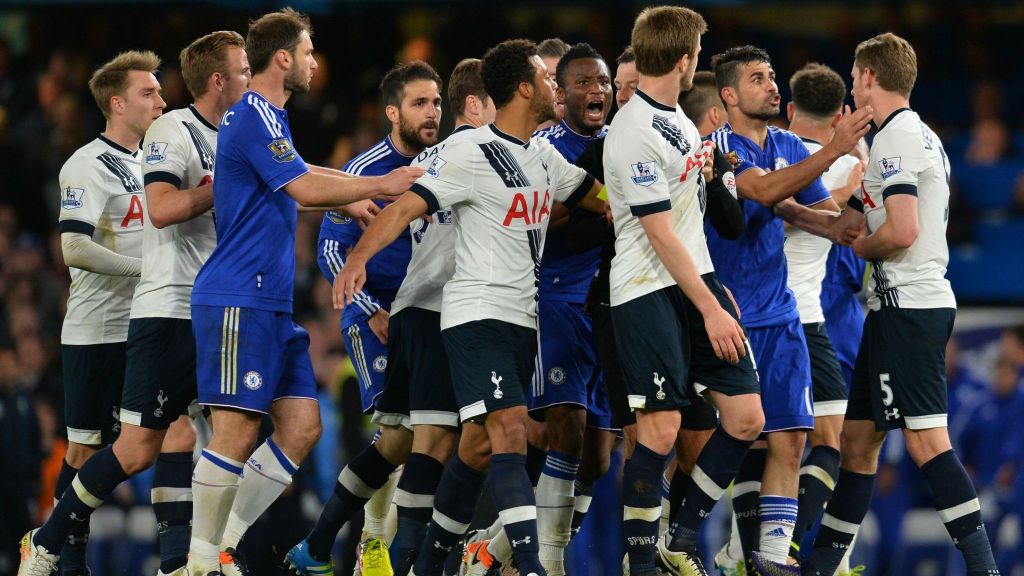
Now, I’m not suggesting I want to see our players completely lose the plot like Spurs did on the night Leicester claimed the title, but I do want to see a huge improvement in this area. All of the best Chelsea teams of the Abramovich era had an edge, a steeliness that pushed the team over the line and allowed them to dig out results even when not playing well. Finding that balance will be key.
And interesting. Bielsa needed only five minutes. I never asked him what he saw, but I think I understand his thought process. When Jesús Pérez, Miki D’Agostino or Toni Jiménez and I watch a game now, we see who we need and who we don’t. We realise immediately. It’s a question of attitude and energy. Do they transmit those traits or not? A guy like Bielsa, who was ahead of his time, just like Griffa, could see the lot in five minutes.
Here, Pochettino talks of a time when Marcelo Bielsa (his manager at the time) decided that a youth player was ready for the first team based on watching him play for five minutes. He clearly places high value on those intangible qualities that are incredibly hard to model statistically.
This also ties back to the themes of leadership and player development. Pochettino will see his job this season as to rebuild (almost from scratch) a team from the group of disparate individuals Chelsea currently has. Part of this is making the team nastier, and harder to play against.
Reasons for Optimism?
Optimism seems like a distant memory for the average Chelsea fan, and we’ve had many false dawns before. But, I have to say that the more I read about Pochettino, the more I like him. He seems to have a blend of strong leadership, tactical understanding and empathy that will make him a good fit at Stamford Bridge, as well as having an edge that every manager who’s ever succeeded in such a cutthroat environment must possess.
My current feeling is one of cautious optimism. With a few smart signings, and a trim of the squad (which seems to have already begun at pace), there are a lot of raw ingredients that Pochettino could work with. It will be an incredibly hard job, and he also needs to get the fans onside (the Spurs connection doesn’t help in this regard!), but if anyone can do it, I believe that Poch can.
 High Press